Common Signs of Sexually Transmitted Infections: Causes, Symptoms, Prevention & Complete Treatment Guide
Sexually Transmitted Infections (STIs) are among the most widespread yet stigmatized health conditions globally. Understand how infections start, recognize critical warning signs (discharge, ulcers, burning, pelvic pain), discover the hidden reality of asymptomatic transmission, and explore clinical cures, testing timelines, and preventative protection.
Clinical Overview: Breaking Stigma Through Medical Science
More than one million curable sexually transmitted infections are acquired every single day worldwide, according to the World Health Organization (WHO). Despite their ubiquity, pervasive social stigma, embarrassment, and misinformation prevent millions from seeking prompt diagnosis and curative treatment.
An STI is not a moral failing—it is simply a biological infection caused by microorganisms that have adapted to transmit through intimate human contact. Most bacterial and parasitic infections are 100% curable with straightforward, low-cost antibiotics, while viral infections can be completely suppressed with modern antivirals or prevented entirely with vaccines.
1. How It Starts: Biological Pathogens & Transmission Mechanisms
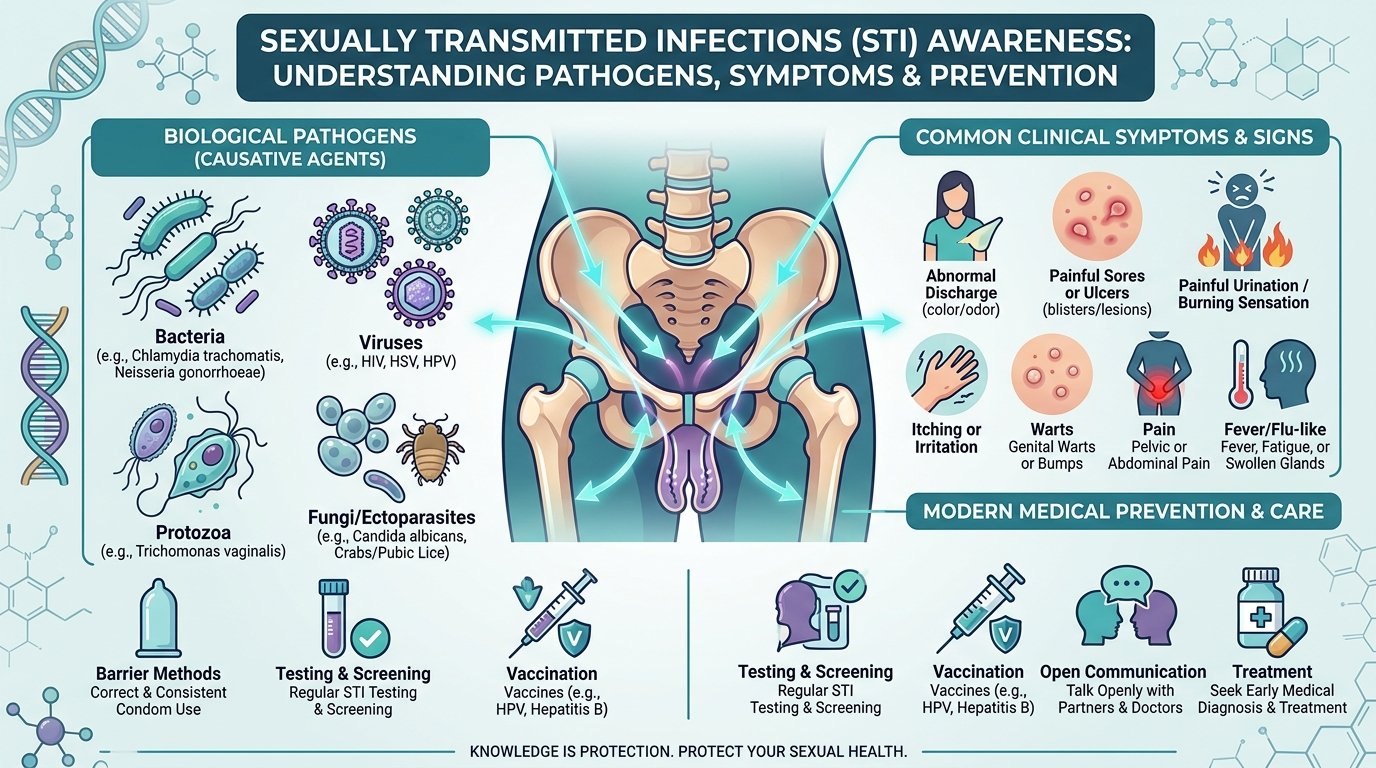
Sexually Transmitted Infections occur when microscopic organisms penetrate the delicate epithelial mucosal membranes of the genitalia, rectum, urethra, or oropharynx (mouth and throat). These pathogens fall into three distinct biological families:
A. Bacterial Pathogens
Single-celled prokaryotic bacteria that invade mucosal tissues, multiplying locally and triggering acute inflammatory cascades:
- Chlamydia: Chlamydia trachomatis
- Gonorrhea: Neisseria gonorrhoeae
- Syphilis: Treponema pallidum
- Mycoplasma Genitalium
B. Viral Pathogens
Intracellular viruses that insert their genetic code into host cells. While incurable, they are manageable with antiviral therapy or preventable via vaccines:
- Human Papillomavirus (HPV)
- Herpes Simplex (HSV-1 & HSV-2)
- HIV (Human Immunodeficiency Virus)
- Hepatitis B Virus (HBV)
C. Parasitic & Protozoal
Microscopic protozoan parasites or ectoparasitic insects that inhabit the urogenital tract or pubic hair shafts:
- Trichomoniasis: Trichomonas vaginalis
- Pubic Lice (Crabs): Pthirus pubis
- Scabies: Sarcoptes scabiei
How Transmission Begins
Transmission begins through three primary routes of physical intimacy:
- Fluid-Borne Transmission: Pathogens present in semen, pre-seminal fluid, vaginal secretions, or rectal fluids (such as HIV, Chlamydia, Gonorrhea, and Hepatitis B) enter through microscopic tears in the mucosal lining during unprotected vaginal, anal, or oral intercourse.
- Skin-to-Skin Contact: Certain pathogens (such as HPV, Herpes Simplex Virus, and Syphilis) reside directly on epithelial skin and mucosal surfaces. They transmit when infected skin rubs against uninfected skin—even in the absence of ejaculation, erection, or fluid exchange.
- Vertical Transmission: Certain untreated infections (Syphilis, HIV, Chlamydia, Gonorrhea, Hepatitis B) can be passed from an infected mother to her infant during pregnancy, vaginal delivery, or breastfeeding.
2. Common Signs & Symptoms: What to Watch For
When an STI does manifest with clinical symptoms, the presentation often depends on your biological sex and the specific organ system colonized by the pathogen. Hallmark warning signs include:
Unusual Genital Discharge
Discharge is the primary marker of mucosal inflammation in the cervix, vagina, or male urethra:
- Gonorrhea: Thick, copious, milky white, yellow, or greenish purulent discharge from the penis or vagina.
- Chlamydia: Clear, watery, or thin cloudy mucous discharge; frequently subtle.
- Trichomoniasis: Frothy, yellow-green vaginal discharge with a pronounced, pungent fishy odor and vulvar redness.
Pain or Burning During Urination (Dysuria)
Pathogens irritating the lining of the urethra cause intense stinging, burning, or a razor-like sensation during micturition. In men, this is known as urethritis, characterized by an urge to urinate frequently with scant urine output. In women, it is frequently misdiagnosed as an ordinary urinary tract infection (UTI), leading to ineffective treatment with bladder antibiotics.
Genital Sores, Blisters & Ulcers
Lesions on the genitalia, anus, buttocks, or mouth are crucial differential indicators:
- Herpes Simplex (HSV-2 / HSV-1): Clusters of tiny, fluid-filled, highly painful vesicles on an erythematous base that burst to form agonizing, weeping open sores before crusting over.
- Primary Syphilis (Chancre): A single, firm, round, completely painless ulcer at the site of inoculation. Because it does not hurt, it is often missed when located inside the vagina, rectum, or mouth.
Genital Warts (Bumps or Lesions)
Caused by low-risk strains of the Human Papillomavirus (primarily HPV types 6 and 11). They appear as small, flesh-colored, pink, or brownish bumps that can be smooth, raised, or have a distinct cauliflower-like rough surface texture. They appear on the vulva, cervix, penis shaft, scrotum, groin, or perianal area and are typically painless, though they may itch or bleed if irritated by friction.
Deep Pelvic Pain & Dyspareunia
In women, untreated bacteria migrate through the cervix into the uterus and fallopian tubes, triggering Pelvic Inflammatory Disease (PID). Symptoms include deep, dull aching in the lower abdomen, pain during deep sexual penetration (dyspareunia), bleeding between periods, and post-coital spotting. In men, bacteria ascending the reproductive tract cause epididymitis—pain, tenderness, and swelling in one testicle.
Systemic & Dermatological Signs
Certain STIs cause whole-body manifestations. Secondary Syphilis produces a non-itchy, reddish-brown macular rash covering the palms of the hands and soles of the feet, accompanied by swollen lymph nodes and patchy hair loss. Acute HIV seroconversion manifests 2 to 4 weeks post-exposure as a severe flu-like syndrome with fever, sore throat, night sweats, fatigue, and widespread lymphadenopathy.
3. Curable vs. Manageable STIs: The Clinical Treatment Matrix
One of the most vital distinctions in sexual health is understanding which infections can be permanently eradicated with medication, and which require ongoing management or suppression:
| Infection | Causative Pathogen | Curable? | Standard Clinical Treatment | Long-Term Risks if Untreated |
|---|---|---|---|---|
| Chlamydia | Bacterium (C. trachomatis) | YES (Curable) | Oral Doxycycline (100mg twice daily for 7 days) or Azithromycin. | Pelvic Inflammatory Disease (PID), tubal ectopic pregnancy, female infertility, epididymitis. |
| Gonorrhea | Bacterium (N. gonorrhoeae) | YES (Curable) | Single 500mg intramuscular injection of Ceftriaxone. | Disseminated Gonococcal Infection (DGI), joint septic arthritis, permanent reproductive tract scarring. |
| Syphilis | Spirochete (T. pallidum) | YES (Curable) | Intramuscular Benzathine Penicillin G (single or weekly doses depending on stage). | Tertiary neurosyphilis, dementia, aortic aneurysms, blindness, congenital fetal demise. |
| Trichomoniasis | Protozoan parasite | YES (Curable) | Oral Metronidazole or Tinidazole (both partners must be treated simultaneously). | Vaginal mucosal vulnerability, increased 2–3x risk of acquiring HIV, preterm labor. |
| Genital Herpes (HSV) | Virus (HSV-1, HSV-2) | NO (Manageable) | Oral antivirals (Valacyclovir, Acyclovir) for episodic outbreaks or daily suppressive therapy. | Recurrent painful lesions, emotional distress, neonatal herpes during childbirth. |
| Human Papillomavirus (HPV) | Virus (200+ strains) | Immune Clearance / Vaccine-Preventable | No direct antiviral cure. Body clears 90% within 2 years. Cryotherapy or topical acids for warts. | High-risk strains (types 16 & 18) cause 99% of cervical cancers, plus anal, penile, and oropharyngeal cancers. |
| HIV | Retrovirus | NO (Chronic Suppressive) | Antiretroviral Therapy (ART). Reaches undetectable viral load: U=U (Undetectable = Untransmittable). | Destruction of CD4 T-cells leading to Acquired Immunodeficiency Syndrome (AIDS). |
4. Testing Modalities & The Biological "Window Period"
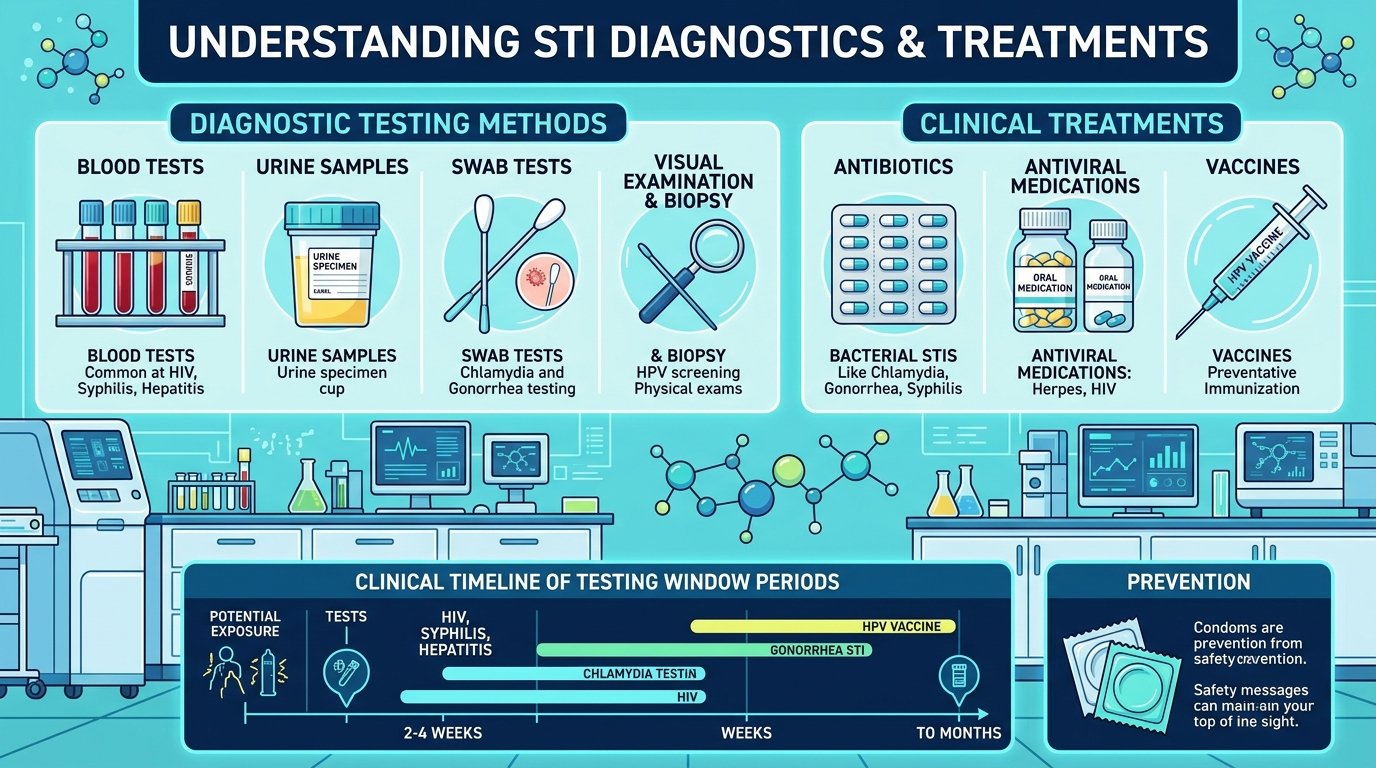
A common and dangerous mistake is getting tested the day after an unprotected sexual encounter. Every diagnostic test requires a minimum incubation timeline—the window period—before bacteria multiply to detectable levels or the body develops detectable antibodies:
Diagnostic Testing Window Period Guide
5. Prevention & Harm Reduction: Protecting Your Intimacy
Modern sexual wellness does not advocate shame or abstinence. Instead, it relies on a layered defense strategy combining physical barriers, biological vaccines, preventative pharmacology, and honest communication:
1. Consistent Barrier Protection
External (male) latex or polyurethane condoms and internal (female) condoms remain the single most effective barrier against fluid-transmitted STIs (HIV, Chlamydia, Gonorrhea, Trichomoniasis, Hepatitis B).
- Use water-based or silicone-based lubricants to prevent friction micro-tears and condom breakage. Avoid oil-based lotions or petroleum jelly, which dissolve latex in under 60 seconds.
- Use dental dams or unlubricated cut condoms during oral-vaginal or oral-anal contact to block throat colonization.
2. Preventative Immunizations
Vaccines provide lifelong immunological defense against two of the most dangerous viral pathogens:
- HPV Vaccine (Gardasil 9): Protects against 9 high-risk and wart-causing HPV types. Approved for individuals aged 9 to 45. Administering it before sexual debut prevents over 90% of cervical and HPV-related cancers.
- Hepatitis B Vaccine: A 3-dose series that creates permanent protective antibodies against viral hepatitis liver damage.
3. Biomedical Prophylaxis: PrEP & PEP
Pharmaceutical strategies designed to prevent HIV acquisition:
- PrEP (Pre-Exposure Prophylaxis): A daily oral pill (or bi-monthly injectable) taken by HIV-negative individuals that reduces sexual transmission risk by over 99%.
- PEP (Post-Exposure Prophylaxis): An emergency 28-day antiretroviral drug regimen initiated within 72 hours following potential high-risk exposure (condom breakage, assault, unprotected contact).
4. Mutual Screening & Partner Notification
Normalizing open sexual health communication before engaging in unbarriered sex is a sign of mutual maturity:
- Schedule routine comprehensive STI panels every 3 to 6 months if having multiple sexual partners, or before initiating a new monogamous partnership.
- If diagnosed with a curable bacterial STI, notify recent sexual partners from the past 60 days so they can receive simultaneous treatment and prevent ping-pong re-infection.
Take Charge of Your Sexual Wellness
Experiencing unusual discharge, pelvic tenderness, burning, or an unexplained sore can be frightening, but delaying medical attention out of fear or embarrassment only allows simple, curable infections to cause irreversible reproductive harm.
Consult a healthcare provider, sexual health clinic, or gynecologist/urologist immediately. Routine testing is private, standard medical care that protects your health, your fertility, and the people you care about.
Frequently Asked Questions (FAQs)
Find clear answers to common questions about this topic.
Speak Honestly, Feel Supported
Connect anonymously with real human consultants for judgment-free emotional support. Speak Anything protects your privacy completely.