The Complete Hair Fall Guide: Growth Cycles, Root Causes, Proven Solutions & Scalp Care
Hair shedding can feel alarming, but understanding the biological hair cycle and identifying the precise root cause is the key to recovery. Learn why hair falls out, how to differentiate normal shedding from alopecia, and the clinically proven solutions that actually restore follicle vitality.
Executive Summary: The Science of Hair Shedding
Few experiences trigger as much distress as noticing handfuls of hair in the shower drain, on your pillow, or across your hairbrush. Hair is deeply tied to identity, self-esteem, and vitality. Yet, hair shedding is fundamentally a biological biomarker—an internal reflection of genetics, hormonal equilibrium, cellular nutrition, metabolic health, and stress levels.
Most individuals waste months on trendy shampoos, salon treatments, or DIY scalp masks that only coat the dead hair shaft without addressing the living hair follicle located 4 millimeters underneath the scalp dermis. By understanding your follicular biology, identifying whether you are dealing with hormonal miniaturization, nutritional deficiency, or stress-shocked shedding, you can intervene with evidence-based treatments that actually stimulate regrowth.
1. Brief Explanation: How Hair Grows & The 4 Follicular Phases
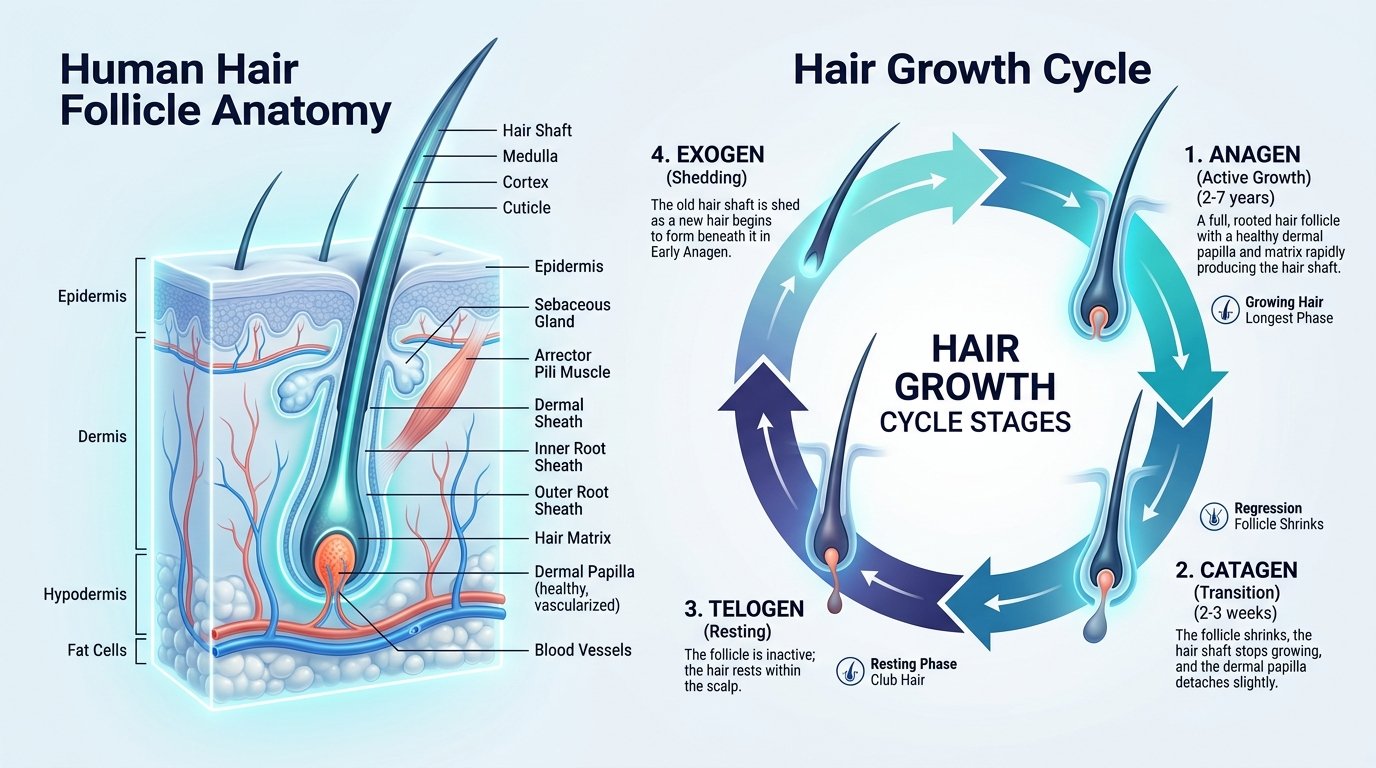
Every strand of hair on your head is produced by an intricate mini-organ known as the hair follicle. At the base of each follicle lies the dermal papilla—a specialized vascular cluster of cells that supplies oxygen, amino acids, and signaling hormones to the rapidly dividing hair matrix. As new keratinocytes divide, they push upward, harden into keratin, and emerge through the scalp surface as the visible hair shaft.
Human hair does not grow continuously. Instead, each follicle operates on an independent, asynchronous biological cycle consisting of four distinct phases:
Phase 1: Anagen (Active Growth)
2 to 7 YearsThe active proliferation stage. Cells in the hair bulb divide rapidly, adding length to the hair shaft at approximately 1 cm per month. Under healthy conditions, 85% to 90% of all scalp hairs are in this phase. The duration of anagen dictates your maximum genetic hair length.
Phase 2: Catagen (Transition)
2 to 3 WeeksA brief regression phase. Cell division halts completely, and the hair follicle detaches from the vascular dermal papilla, shrinking to about one-sixth of its original diameter. Only about 1% to 2% of your hair is in catagen at any time.
Phase 3: Telogen (Resting)
2 to 4 MonthsThe resting interval. The follicle remains completely quiescent while a bulbous keratin plug (a "club hair") forms at the base. About 9% to 10% of scalp hair is in telogen. During this phase, new matrix cells begin preparing for a new anagen cycle below.
Phase 4: Exogen (Active Shedding)
50–100 Hairs/DayThe shedding phase. The club hair naturally dislodges and falls away as a new anagen hair shaft pushes upward from below. Shedding 50 to 100 strands daily is therefore a healthy sign of follicular renewal, not baldness.
2. Why the Issue is Found: The 6 Root Causes of Hair Fall
When daily hair loss climbs beyond 100 strands, or when you notice that regrowing hair is progressively thinner, shorter, and translucent, the hair cycle has been disrupted. Dermatologists categorize the root causes into six primary triggers:
Genetics & DHT Sensitivity (Androgenetic Alopecia)
This is the single most common cause of permanent hair thinning, affecting up to 50% of men and 30% of women. The culprit is not necessarily having too much testosterone, but having genetically sensitive hair follicles. An enzyme called 5-alpha reductase (5-AR) converts circulating testosterone into Dihydrotestosterone (DHT).
Telogen Effluvium: Physiological & Psychological Stress
If you experience sudden, diffuse shedding across the entire scalp without a receding pattern, you are likely suffering from Telogen Effluvium (TE). Acute physiological trauma triggers a massive release of cortisol, substance P, and pro-inflammatory cytokines that essentially "shocks" 30% to 50% of anagen hairs directly into the telogen resting phase at the same time.
Nutritional & Micronutrient Starvation
Hair is metabolically expensive for the body to manufacture, but biologically non-essential for immediate survival. When the body faces nutritional scarcity, it instantly diverts minerals and amino acids away from hair matrix cells to vital organs like the heart, liver, and brain:
- Low Ferritin (Iron Storage): Ferritin is the cofactor for ribonucleotide reductase, the enzyme essential for DNA synthesis in rapidly dividing hair matrix cells. Serum ferritin below 50 ng/mL is one of the leading drivers of female diffuse hair fall.
- Vitamin D3 Deficiency: Vitamin D receptors (VDR) on keratinocytes modulate hair follicle cycling and anagen initiation. Low Vitamin D3 directly impairs new follicular activation.
- Zinc Deficiency: Zinc is a critical structural cofactor for protein synthesis and tissue repair in the follicle bulb. Low zinc weakens structural tensile strength.
- Inadequate Dietary Protein: Hair fibers consist of 85% to 90% keratin protein. Severe caloric deficits or low-protein diets starve follicles of cysteine and methionine.
Endocrine & Hormonal Imbalances
Hormones directly regulate follicular cellular machinery. Thyroid dysfunction (both hypothyroidism and hyperthyroidism) halts cellular metabolism in the follicle, resulting in dry, brittle, diffusely thinning hair. Polycystic Ovary Syndrome (PCOS) causes elevated free androgens and insulin resistance in women, triggering crown thinning and female pattern alopecia. Furthermore, the steep drop in placental estrogen 2 to 4 months postpartum leads to acute postpartum telogen effluvium.
Scalp Microbiome Dysbiosis & Chronic Inflammation
A healthy hair strand cannot thrive in unhealthy, inflamed soil. Seborrheic dermatitis, caused by an overgrowth of Malassezia yeast feeding on sebum, triggers stubborn greasy flakes, itching, and redness. Chronic scratching physically damages follicular anchors, while microbial inflammation creates oxidative stress that accelerates follicular senescence and premature shedding.
Mechanical & Chemical Stress (Traction & Over-Processing)
Persistent tension on the hair root from tight ponytails, dreadlocks, weaves, or tight buns causes Traction Alopecia—physical micro-tearing of the follicle root that can lead to permanent scarring if sustained over years. Concurrently, chemical straighteners, bleaching agents, and daily heat tools (over 180°C) denature the alpha-keratin helix, causing extensive breakage along the mid-shaft that mimics root shedding.
3. Identifying Your Hair Loss Type: Diagnostic Comparison Table
Not all hair loss looks or behaves the same way. Identifying your specific presentation dictates whether you need hormone modulation, nutritional replenishment, or anti-inflammatory scalp treatments:
| Hair Loss Condition | Key Manifestation | Primary Mechanism | Onset & Reversibility |
|---|---|---|---|
| Androgenetic Alopecia (AGA) | Receding temples / M-shape hairline (men); widening central part with preserved hairline (women). | Genetically determined DHT sensitivity; progressive follicle miniaturization. | Gradual onset over years. Highly manageable/reversible if treated early before follicles fibrose. |
| Telogen Effluvium (TE) | Sudden, diffuse shedding across whole scalp; white keratin bulb visible on roots; thinning ponytail. | Stress shock, high fever, post-illness, childbirth, or severe nutritional crash. | Rapid onset (2–3 months post-event). 100% reversible once systemic trigger is corrected. |
| Alopecia Areata | Smooth, round, coin-sized completely bald patches; exclamation mark hairs at the margins. | Autoimmune condition where T-cells attack the follicular bulb immunoprotection. | Sudden onset. Requires intralesional corticosteroids or JAK inhibitors. |
| Traction Alopecia | Thinning along frontal hairline, temples, and nape; tenderness and folliculitis bumps. | Mechanical tension from tight hairstyles, heavy extensions, or helmets. | Slow progression. Reversible if tension is removed early; permanent if scarring occurs. |
4. Evidence-Based Solutions & Medical Treatments
Modern dermatology has advanced significantly. You do not need to rely on unverified folklore remedies. The following therapies are supported by randomized controlled trials (RCTs) and regulatory health approvals:
A. Minoxidil (Topical 5% & Low-Dose Oral)
FDA-Approved First-LineMinoxidil acts as an ATP-sensitive potassium channel opener and microvascular vasodilator. In the scalp, follicular sulfotransferase enzymes convert it into active minoxidil sulfate. This widens the microcapillaries feeding the dermal papilla, dramatically enhances oxygen and nutrient delivery, and forces dormant telogen follicles into vigorous anagen growth.
B. 5-Alpha Reductase Inhibitors (Finasteride & Dutasteride)
DHT SuppressionWhile Minoxidil acts as a growth stimulant, Finasteride directly addresses the root hormonal destruction in androgenetic alopecia. Finasteride selectively inhibits the Type II 5-alpha reductase enzyme, lowering circulating DHT levels by roughly 70%. This completely halts follicular miniaturization and allows shrunken follicles to regain thickness and diameter.
Clinical Efficacy: 5-year longitudinal clinical trials show that Finasteride 1mg daily stops hair loss progression in over 90% of men, with 65% experiencing visible hair regrowth.
*Note: Finasteride is primarily indicated for men and select post-menopausal women under specialist care. It is contraindicated in women of childbearing potential due to fetal development risks. Topical finasteride serums (0.1% to 0.25%) offer comparable local scalp DHT suppression with negligible systemic absorption.
C. Targeted Nutritional & Micronutrient Replenishment
Supplements only help when there is a biological deficit. Routine "multivitamin gummies" rarely provide therapeutic dosing. Targeted lab-guided replenishment provides superior outcomes:
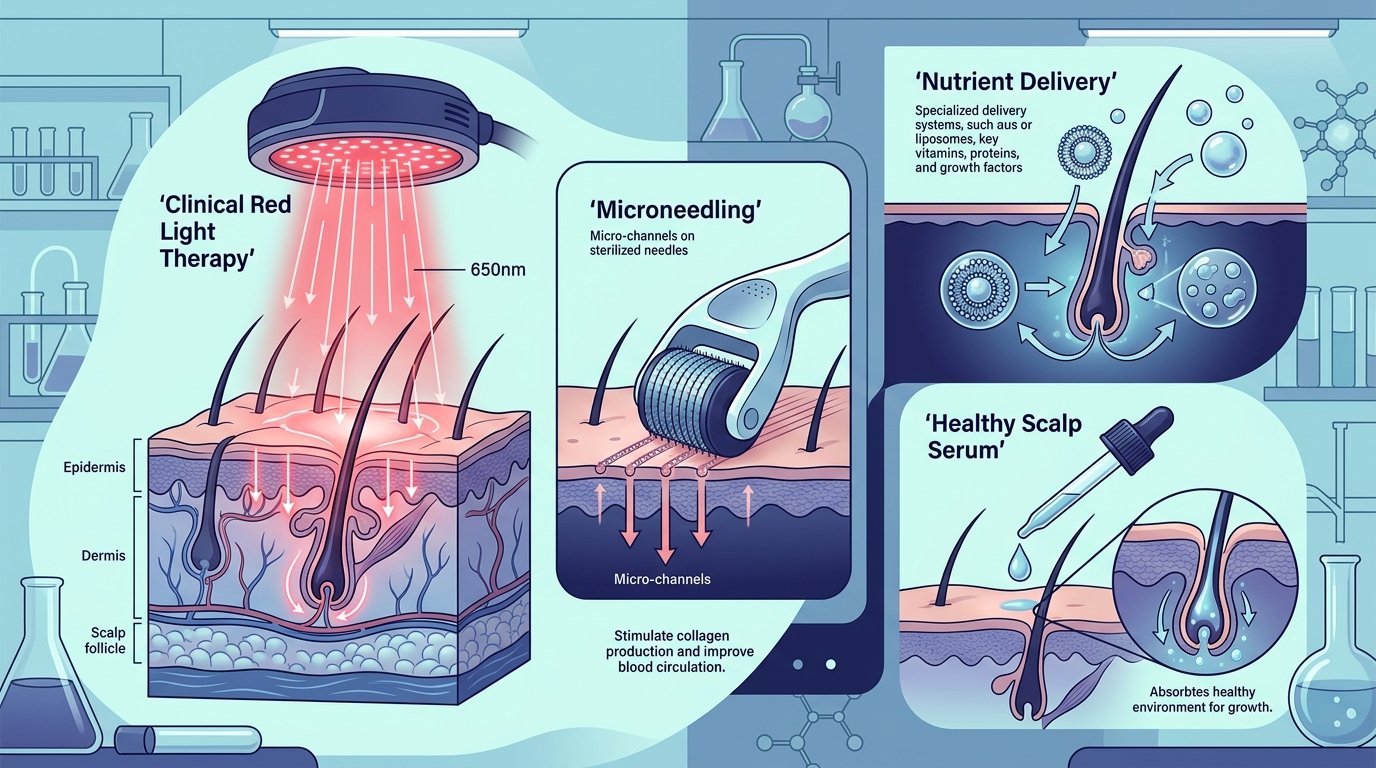
D. Advanced Clinical In-Office Procedures
For individuals seeking faster recovery or those wanting to amplify medical therapy:
5. Your Actionable Daily Scalp Care Protocol
Daily hair management should protect follicular integrity and maintain an optimal scalp environment. Follow this dermatologist-approved routine:
✅ What to Do (Hair & Scalp Health)
- Wash Frequently Enough: Wash your scalp 2–3 times a week (or daily if very oily). Allowing sebum and sweat to accumulate breeds Malassezia and causes follicular inflammation.
- Use 1–2% Ketoconazole Shampoo: Use twice weekly. Beyond eradicating dandruff, ketoconazole has mild topical anti-androgen properties that reduce local scalp DHT.
- Dry with Microfiber & Cool Air: Gently pat hair dry with a soft microfiber towel. Use the cool or medium heat setting on blow dryers, holding it at least 6 inches from the scalp.
- Wide-Tooth Comb on Detangled Hair: Comb from the ends upward to gently remove tangles without yanking hair from the root bulb.
- Prioritize 7–8 Hours of Sleep: Melatonin secreted during deep REM sleep is a potent antioxidant that binds to follicular melatonin receptors, promoting anagen maintenance.
❌ Mistakes to Avoid
- Vigorous Towel Rubbing: When wet, the keratin hydrogen bonds are weakened by 30%. Friction snaps the cuticle, causing widespread shaft breakage.
- Leaving Heavy Oils Overnight on Flaky Scalps: Castor oil, mustard oil, or coconut oil create an occlusive barrier that traps yeast, worsening scalp dermatitis.
- Brushing Wet Hair with Fine Bristles: Causes immense mechanical tension on the follicle root, accelerating traction shedding.
- Tight Ponytails & Buns: High chronic tension on the front and temporal hair leads to irreversible follicular fibrosis (traction alopecia).
- Extreme Crash Dieting: Slashing calories below your basal metabolic rate rapidly triggers telogen effluvium within 8 to 12 weeks.
6. When to Consult a Specialist & Essential Blood Tests
If you experience burning, scaling, rapid hair loss over 4 weeks, circular bald patches, or widening of your hair part, consult a board-certified dermatologist or trichologist. Before initiating treatments, request this targeted blood panel:
The Essential Hair Loss Diagnostic Panel
Patience & Consistency: The Golden Rules of Regrowth
Because the biological hair cycle takes several months to transition from telogen back to full anagen, no legitimate hair loss treatment shows instant results in 7 days. Anyone promising overnight miracles is selling misinformation.
Expect to see shedding stabilize by month 2 to 3, and visible baby hair thickening around month 4 to 6. Give your follicles the clinical time, nutrients, and care they need—consistency is where real transformation happens.
Frequently Asked Questions (FAQs)
Find clear answers to common questions about this topic.
Speak Honestly, Feel Supported
Connect anonymously with real human consultants for judgment-free emotional support. Speak Anything protects your privacy completely.