August 16, 2026•16 min read•By Paranormal Investigator
Audio Narrator
Listen to Horror Story Audio
Section 1: The 11:47 PM Midnight Bus
The last bus from the city was supposed to have only four passengers.
At least, that's what the driver told me.
It was 11:47 p.m. when I boarded the old bus heading toward my village. Outside, the road was almost completely empty. A cold wind pushed dust across the windshield, and the driver kept the radio off.
I sat in the back.
There were three other passengers: an old man near the front, a woman holding a sleeping child, and a young man sitting alone beside the window.
The 11:47 PM Midnight Bus — Deserted Highway Under the Cold Midnight Wind
Section 2: The Stranger in the White Kurta
The bus left the city.
Twenty minutes later, we passed the village kabristan—the old cemetery beside the highway.
That's when the driver suddenly stopped.
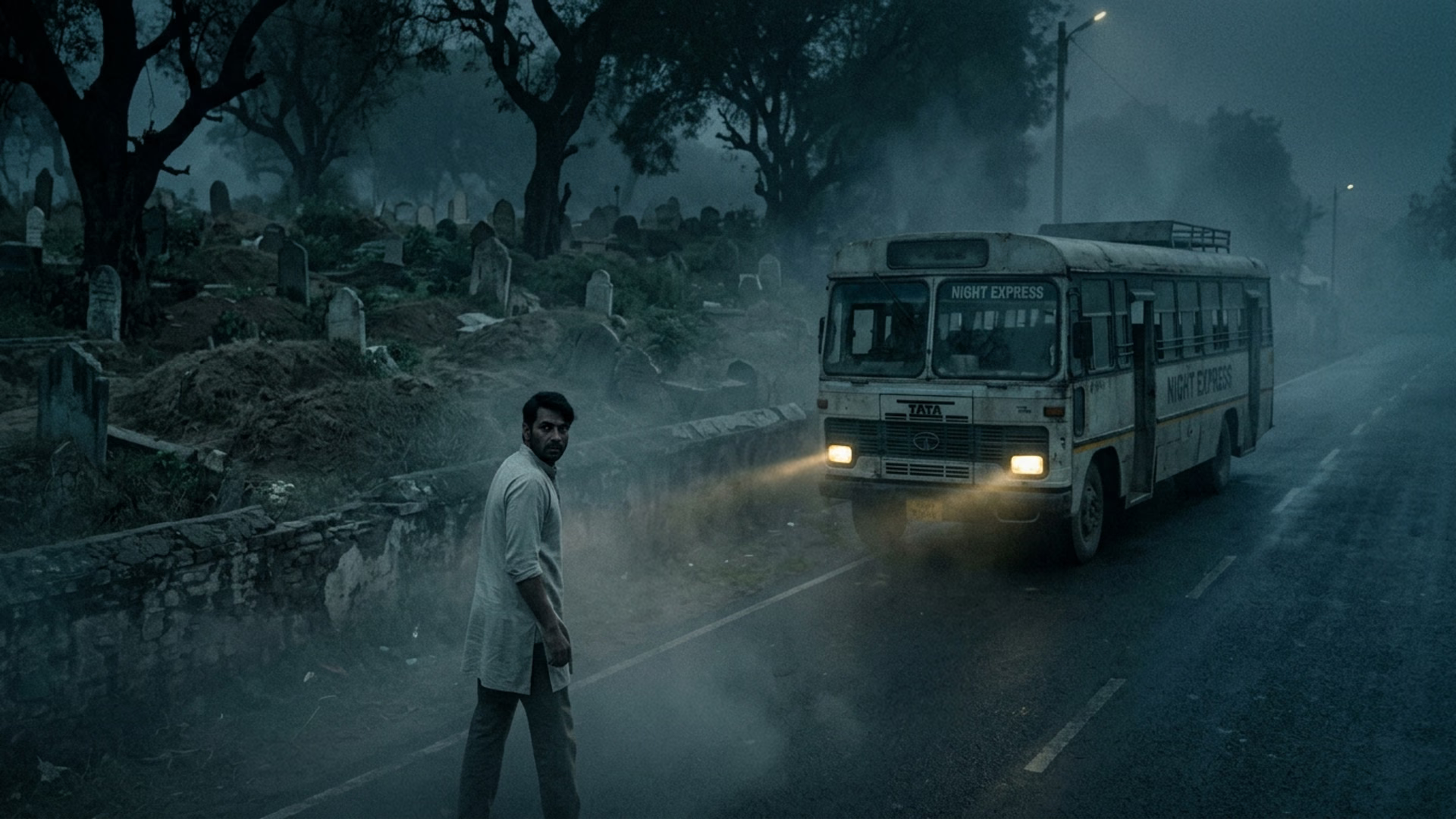
I looked up. There was a man standing beside the road. He wore a white kurta. His clothes were covered in mud. And he was staring directly at the bus.
The driver lowered his window. “Where are you going?”
The man didn't answer. He simply pointed toward the empty seat beside me.
The driver looked uncomfortable. But after a few seconds, he opened the door.
The Stranger in the White Kurta — Mud-Covered Specter Standing by the Highway Cemetery
Section 3: Black Mud & The Warning
The man climbed aboard. He walked slowly down the aisle.
As he passed me, I noticed something strange. His feet were wet. Not with rain. With black mud.
He sat beside me without saying a word. The bus started moving again.
I tried not to look at him. But after a few minutes, I heard him whisper:
“Don't get off at your stop.”
I turned. His face was pale. “Why?”
He looked toward the front of the bus.
“Because everyone else already did.”
Black Mud and The Warning — Terrified Passenger Sweating Next to Muddy Entity
Section 4: Vanished Passengers & The Cemetery Path
I looked around.
The old man was gone. The woman and her child were gone. The driver was still there. But the bus was completely silent.
I checked my phone. No signal.
The young man beside me suddenly smiled.
“Do you know where this road goes after midnight?”
I shook my head.
He leaned closer. “Back to the kabristan.”
I laughed nervously. Then the bus lights went out.
For a few seconds, there was complete darkness. When the lights came back on, the young man was gone. His seat was empty. But there was mud covering it.
Vanished Passengers — Empty Midnight Bus Interior Plunged in Cold Dread
"The boundary between what is real and what is myth begins to blur when the lights fade. Some things are better left undisturbed."
Section 5: Driving Among the Graves
The driver suddenly screamed. I rushed toward him.
He was pointing through the windshield. The road ahead had disappeared. Instead, the bus was driving between rows of graves. The cemetery.
We were back at the kabristan.
The driver slammed on the brakes. The bus stopped.
Driving Among the Graves — Bus Headlights Illuminating Mist-Shrouded Tombstones
Section 6: The Voice Outside the Door
Then someone knocked on the rear door. Three times.
Knock.
Knock.
Knock.
The driver whispered: “Don't open it.”
Another knock.
Then a voice came from outside. My own voice.
“Please open the door.”
I froze. The driver looked at me. “Whatever happens,” he whispered, “don't answer.”
The voice came again. This time it was louder.
“Please…”
Then dozens of voices joined it. Men. Women. Children. All calling from outside. All using my name.
The driver turned off the engine. We waited.
The Voice Outside the Door — Shadow Hands Pressing Against Fogged Glass
Section 7: The Note & The Cancelled Route
After several minutes, everything became silent. He finally started the bus.
The road was normal again. We drove until dawn.
When the sun rose, I looked at the seat beside me. There was a small piece of paper lying there. It had one sentence written on it:
“You were the passenger we were waiting for.”
I never took that bus again.
A week later, I asked the transport office about the driver. They told me something that made my blood run cold.
The bus I had boarded that night had been out of service for three years. The driver had died in an accident. And the route had been permanently cancelled after his bus crashed beside the kabristan.
The Note and The Cancelled Route — Cursed Handwritten Paper on Dusty Wood
Section 8: The Stranger Outside the Window
I still have the paper.
Sometimes, late at night, I hear a bus stopping outside my house.
I look through the window. There is never a bus.
Only a man in a white kurta standing beside the road. Waiting.
And every time he sees me, he points toward the empty seat beside him.
As if my journey isn't over yet.
The Stranger Outside the Window — Silhouette in White Kurta Waiting in the Dark Rain
Reading scary stories can sometimes make us feel unsettled or raise our heart rate. If you are feeling spooked, anxious, or lonely at night, download Speak Anything. You can talk to a real human helper anonymously, 24/7. Get calm, zero judgment, and find peace of mind.
Explore Related Paranormal Topics & Google Searches
Click any topic to search archives
Readers investigating The Passenger From the Kabristan frequently search the following documented urban legends, real supernatural encounters, and dark archives:
When Rohan bought the isolated country house empty for twenty-three years, he ignored the warning signs: no birds on the roof, dead soil around the perimeter, and no insect sounds. But the first night, every clock freezes at 3:17 a.m., an obsidian door manifests beneath the staircase leading into an impossible underground labyrinth of clawed names, and the sunrise reveals a pitch-black eclipsed sun hanging over a motionless forest. As a silent crowd gathers among the pines pointing at the house, a woman named Meera appears outside his second-floor window smiling: 'Let us in.' Two years after escaping, an unaddressed letter arrives with a single photograph and six words: 'YOU LEFT THE DOOR OPEN.'
When Arjun bought the house at the end of the narrow road, the agent gave him only one rule: 'Whatever you do, don't open the black door.' After hearing rhythmic knocks at 2:13 a.m. and his own voice calling from behind the wood, curiosity overcomes him. Opening the door reveals an impossible stone staircase descending sixty steps into a bottomless subterranean abyss—where footsteps are climbing toward him. Then the 1958 disappearance records surface, a door manifests in his bedroom ceiling, his own black-eyed future self smiles from the rain outside, and a desperate phone call reveals he has already been missing for three months. Decades later, the house collapses into ruins, but the black door remains standing alone in the dead grass—waiting to open.
Every night, just after midnight, a woman in an ornate crimson wedding sari appeared beneath the ancient banyan tree at the edge of the village. The villagers called her The Red Bride. Men drawn by lust, greed, or gold followed her into the dark forest, only to behold her charred, cracked face and unnatural smile before disappearing forever. But years later, when a kind-hearted youth named Arjun offers her shelter in the rain without asking for her wealth, a century-old curse confronts its ultimate truth: she was never looking for someone to save her—she was looking for someone who could truly see her.
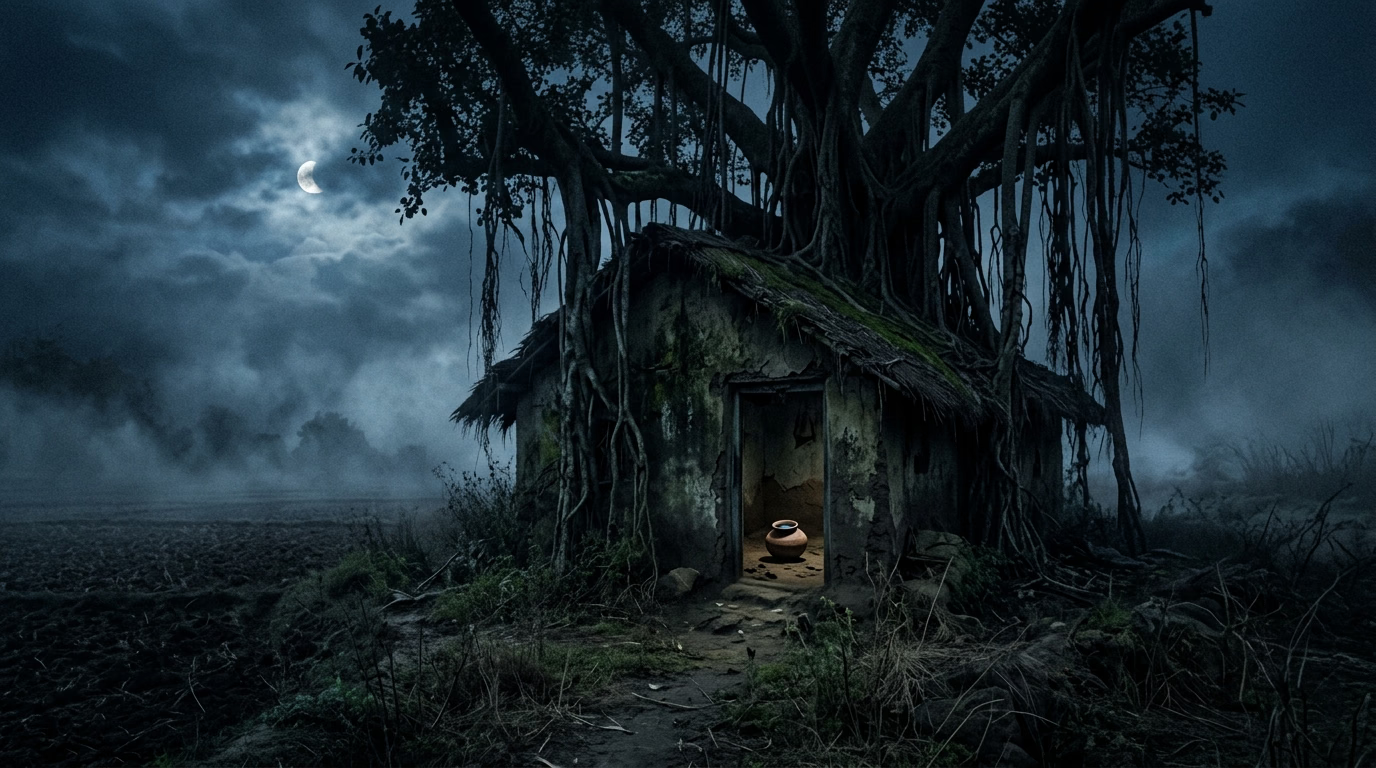
Beyond the village fields stood an ancient, blackened hut beneath a massive banyan tree. Everyone knew the rule: you could enter, explore, or even sleep inside safely, but never drink the water from the earthen pot. When twenty-two-year-old Ravi defies the superstition and drinks from the metal cup to mock his friends, a terrifying visitor appears at 3:17 a.m. with dripping wet hair covering a faceless dark void. Soon, Ravi's eyes turn pitch-black, and a woman's ancient voice speaks through his throat: 'She can't leave the hut... unless someone drinks.'
At 2:17 a.m., an old highway cut through the pitch-black wilderness like a jagged scar. When three violent robbers ambush young couple Arjun and Meera, smashing their car window and taking their lives before vanishing into the night, they believe they have committed the perfect crime. But at exactly 3:03 a.m. the following night, the abandoned car starts by itself, its dashboard flickering to life and its radio hissing: 'You took our lives. Now we'll take yours.' One by one, the killers are hunted down by an empty black sedan whose back seat carries pale passengers with void-black eyes. And once the car chooses you, there is nowhere on the highway you can hide.
Outside the isolated village of Black Hollow lay Whispering Woods, a dense, mist-shrouded forest where nobody ventured after twilight. Every night before midnight, a girl's haunting, melodic voice echoed deep among the pines, singing the same ancient nursery rhyme. Everyone knew the three unbreakable rules: Never ignore her, never disrespect her, and most importantly—never let her finish the song. When four friends enter the trees to debunk the legend, an insult turns the woods pitch black, physical bodies vanish leaving severed screaming shadows, and the final verse awakens thousands of empty-eyed lost souls waiting in the dark.