The Light That Stayed On: Brinewatch Beacon, the Ghost Vessel, and the Listening Post of Souls
August 12, 2026•35 min read•By Paranormal Investigator
Audio Narrator
Listen to Horror Story Audio
Section 1: The Jagged Edge of Brinewatch
The coastal village of Brinewatch clung precarious to a jagged edge of black basalt rock, the kind of harsh, weather-beaten place where the Atlantic Ocean kept score exclusively in sea salt, broken timber, and crashing spray.
Standing at the furthest point of the northern headland was the Brinewatch Lighthouse—a tall, white blade of granite and iron cutting against the slate-grey morning sky. Its powerful lamp remained a stubborn, unyielding constant, burning brightly even when the town’s fragile electrical grid flickered and died with every sudden autumn gale.
Storytelling Scene: The Light That Stayed On: Brinewatch Beacon, the Ghost Vessel, and the Listening Post of Souls — Scene 1
Jonas Hale tended the light by long-standing habit more than conscious belief. He had inherited two solemn duties from his father: maintaining the optical mechanism and keeping a daily log of the sea—a father who had never spoken a single word about the tragic night in 1992 when an unseasonable tide swallowed a fleet of fishing vessels and never returned their stories to the living.
For Jonas, the lighthouse was not merely a historical building; it was an ancestral obligation that anchored his solitary life to the cliffside.
Storytelling Scene: The Light That Stayed On: Brinewatch Beacon, the Ghost Vessel, and the Listening Post of Souls — Scene 2
Section 2: Jonas Hale and the Inherited Duty
Brinewatch looked after its own customs and maritime rituals like a cherished family keepsake.
Down at the harbor office, the veteran harbor master maintained a heavy, weathered logbook filled with dark ink that bled toward the edges of the parchment—a daily record of wind velocity, swell heights, and the occasional written reminder that a foghorn was never just a mechanical sound, but a memory in urgent need of direction.
The local bakery closed at dawn, the fishermen swapped quiet gossip over chipped ceramic mugs at the pier, and the white lighthouse, perched high upon the cliff, watched over the harbor with a single, unblinking glass eye.
Storytelling Scene: The Light That Stayed On: Brinewatch Beacon, the Ghost Vessel, and the Listening Post of Souls — Scene 3
Jonas lived alone in the keeper’s cottage—a narrow, stone-built house that faced the ocean as if perpetually bowing to its vastness. He adhered strictly to daily routines: keeping a copper kettle heating on the wood stove for incoming storms, maintaining a stack of yellowed sea maps he never navigated but kept for good luck, and carrying a corroded white iron key that unlocked the upper lantern room where fading photographs of 19th-century sea captains clung to the damp walls.
He often spoke aloud to the lamp as one might speak to a stubborn, loyal animal—softly, insistently, never entirely certain whether the words were meant for the oil burner or for the part of his own heart that believed the lamp listened back.
Storytelling Scene: The Light That Stayed On: Brinewatch Beacon, the Ghost Vessel, and the Listening Post of Souls — Scene 4
Section 3: The Ghost Bell in the Autumn Fog
The first indication that something fundamental had shifted at Greyhaven occurred during a late autumn week shrouded in thick, impenetrable sea fog.
It was 2:00 AM when the distant, hollow toll of a ship’s brass bell echoed through the mist—a heavy, metallic sound that did not belong to any registered vessel currently anchored in the bay or listed in the harbor master's arrival log.
Seconds later, the automated foghorn on the cliff answered with a long, mournful blast. The two acoustic voices rolled together across the dark water as if a private conversation happening miles out at sea had chosen Brinewatch as its sudden venue.
Storytelling Scene: The Light That Stayed On: Brinewatch Beacon, the Ghost Vessel, and the Listening Post of Souls — Scene 5
Jonas climbed to the lantern room, checked the pressure lamps, tuned the rotating Fresnel lens assembly, and watched the brilliant white beam sweep across the churning tide with the delicate care of someone adjusting a crying infant. The beam sliced cleanly through the fog, revealing only empty black water.
Yet, as the light passed over the water, Jonas felt a profound sensation of discovery—a sudden arctic chill that wasn't driven by wind, accompanied by a distinct physical pull in the air that pointed directly toward the old lighthouse cemetery situated beyond the southern cliff ridge.
Storytelling Scene: The Light That Stayed On: Brinewatch Beacon, the Ghost Vessel, and the Listening Post of Souls — Scene 6
Section 4: The Field of Standing Stones
The lighthouse cemetery was a solitary, wind-swept field of standing granite stones that local elders described as the place *"where the sea forgot to swallow."*
The gravestones were ancient, moss-covered, and etched with names that blurred into obscurity whenever rain washed over the headstones. Jonas walked the damp dirt path to the ridge after finishing his morning shift, his leather boots leaving deep tracks in the mud.
Storytelling Scene: The Light That Stayed On: Brinewatch Beacon, the Ghost Vessel, and the Listening Post of Souls — Scene 7
He stopped before a specific, sinking stone carved with a name that should have held no personal meaning for him: Harker—a young deckhand who had vanished in a catastrophic winter gale fifty years ago.
Despite decades of salt air and erosion, the carved letters of Harker's name appeared remarkably fresh in the drizzling rain, looking as though someone had carved them with a sharp chisel just hours before to remind the living of those who had vanished into the ocean swell.
Storytelling Scene: The Light That Stayed On: Brinewatch Beacon, the Ghost Vessel, and the Listening Post of Souls — Scene 8
Section 5: The Dusk Journal on the Kitchen Table
When Jonas returned to the keeper's cottage that evening, he found an unexpected object resting on his kitchen table.
It was a medium-sized journal, left there as if an uninvited visitor had slipped inside at dusk and departed before the lamps were lit.
The pages were pale cotton parchment, unweathered by age, and filled with precise, elegant handwriting that looked near-perfectly formed—as though written by an investigator trained to document every micro-second of an event.
Storytelling Scene: The Light That Stayed On: Brinewatch Beacon, the Ghost Vessel, and the Listening Post of Souls — Scene 9
The entries spoke not of commercial shipping schedules or tidal charts, but of a different kind of maritime voyage—a voyage into the art of listening.
The writer described the ocean not as a physical adversary, but as a vast, pressurized repository of human memories—a realm of stored consciousness that demanded answers to questions no living person dared voice aloud. The entry concluded with a short, chilling sentence:
*“The light is not always kept for others. Sometimes the light is kept for those who listen.”*
Storytelling Scene: The Light That Stayed On: Brinewatch Beacon, the Ghost Vessel, and the Listening Post of Souls — Scene 10
Section 6: The Pulsing Fresnel Lens
The following morning, the atmosphere inside the upper lamp room felt completely altered.
The massive Fresnel lens array—normally a cold, mechanical artifact of polished glass and brass gears—seemed to pulse with an unmistakable, subtle heartbeat.
Storytelling Scene: The Light That Stayed On: Brinewatch Beacon, the Ghost Vessel, and the Listening Post of Souls — Scene 11
A persistent draft moved through the circular room in a manner suggesting that interior doors were opening and closing themselves without human hands touching their latches. The oil lamp began to burn with a steadier, fierce, and almost impatient flame, as though it was demanding that Jonas hurry through his technical checks and reach the true purpose of the night’s work.
Outside, the ocean sky turned a violent, bruised purple as a late-season gale approached the coast.
Storytelling Scene: The Light That Stayed On: Brinewatch Beacon, the Ghost Vessel, and the Listening Post of Souls — Scene 12
Section 7: "You're Late" and the Name Eleanor
That night, the storm struck Brinewatch with a ferocity that refused to be gentle. The wind roared around the granite tower like a kettle boiling on high heat, and heavy waves crashed against the lower cliffs with a rhythmic drumbeat that shook the cottage windows.
Jonas stood in the lantern room, adjusting the height of the glass mantle and focusing the sweeping beam, when a human voice spoke.
The voice did not emanate from the doorway or the catwalk; it materialized directly in the air between the rotating lens and his left ear. It was a whisper so precise, soft, and childlike that it felt strangely comforting:
*"You’re late."*
Jonas spun around, certain an intruder had climbed the tower. The room was empty of living bodies, yet crowded with the heavy weight of invisible memory.
Storytelling Scene: The Light That Stayed On: Brinewatch Beacon, the Ghost Vessel, and the Listening Post of Souls — Scene 13
The shadows flickering in the corners looked less like dark room corners and more like the distinct silhouettes of former keepers who had watched the lamp in their own eras, long before his birth. Jonas pressed his palm flat against the cool steel railing, steadying his body as if bracing for a fall.
The soft voice whispered again, softer this time, uttering a name he barely recognized from old village records:
*"Eleanor..."*
It was an acoustic echo originating not from the deceased, but from the living memory of those who had stayed too long in a place that required their total attention to keep from sinking back into the sea.
Storytelling Scene: The Light That Stayed On: Brinewatch Beacon, the Ghost Vessel, and the Listening Post of Souls — Scene 14
Section 8: The Barnacled Ghost Ship in Blue Light
At the climax of the storm, a massive vessel materialized on the ocean horizon where no ship should have been able to navigate.
It was a ghost ship—its high wooden masts rain-streaked and splintered, its tattered canvas sails dripping with sea brine, and its heavy wooden hull encrusted with thick layers of ancient barnacles and seaweed.
Storytelling Scene: The Light That Stayed On: Brinewatch Beacon, the Ghost Vessel, and the Listening Post of Souls — Scene 15
The ship’s brass bell tolled for a second time across the stormy water. Immediately, the entire lantern room filled with an intense, cold blue light that did not originate from the oil lamp's golden flame.
The blue illumination bathed the brass gears and glass lenses in a ghost-like glow. As the first rays of dawn began to break over the eastern horizon, the phantom vessel faded slowly into the ocean mist, leaving behind an overwhelming sensation of being watched from both water and sky—as if the ocean had turned its gaze inward and judged Jonas's stewardship.
Storytelling Scene: The Light That Stayed On: Brinewatch Beacon, the Ghost Vessel, and the Listening Post of Souls — Scene 16
"The boundary between what is real and what is myth begins to blur when the lights fade. Some things are better left undisturbed."
Section 9: The Wandering Beam and Snagged Nets
The days following the storm brought a cascade of unnerving, subtle incidents across Brinewatch.
A historical logbook page that Jonas had pinned to his cottage corkboard vanished overnight, only to reappear hours later pinned to the inside of the lantern room door—misplaced by an unseen hand that knew the exact layout of the tower.
Storytelling Scene: The Light That Stayed On: Brinewatch Beacon, the Ghost Vessel, and the Listening Post of Souls — Scene 17
The lighthouse lamp’s sweeping beam began to wander. Instead of maintaining its set navigational arc over the shipping lanes, the light paused and studied specific rocky formations along the coast, as though the beam was tracing an invisible map that only the ocean could read.
Down at the harbor, local fishermen began avoiding the waters near the northern cliffs. They reported that their heavy nylon nets kept snagging on invisible obstacles in deep water where the seabed was completely flat—as if the sea were weaving net traps for memories it wished never to lose again.
Storytelling Scene: The Light That Stayed On: Brinewatch Beacon, the Ghost Vessel, and the Listening Post of Souls — Scene 18
Section 10: The Driftwood Key and the Second Entry
In the nights that followed, Jonas began hearing a distinct, human cadence carried within the wind—a continuous conversation passing between wind gusts like a gathering of long-time neighbors catching up after a storm.
The voices spoke of the Brinewatch shoreline a century ago, of an old lower harbor that had been buried beneath a catastrophic mudslide, and of residents who had vanished not by drowning at sea, but by walking into an unspoken rumor that refused to die.
One evening, the mysterious kitchen journal appeared open on his desk to a page he had never seen before. The handwriting had subtly evolved—the letters more ornate, the punctuation sharper—as if a second author had contributed to the text.
The entry read:
Storytelling Scene: The Light That Stayed On: Brinewatch Beacon, the Ghost Vessel, and the Listening Post of Souls — Scene 19
*“We hold the light so the dark does not swallow us all at once.”*
That night, the heavy door to the lamp room yielded to a subtle pressure that was not wind. Resting on the wooden workbench was an object: a piece of dark sea-driftwood carved into the rough shape of an ancient key.
It looked ceremonial and solemn—as if a child had carved a key to unlock a secret the town had spent decades avoiding. The driftwood key fit no physical lock in the cottage, yet when Jonas held it in his palm, the lantern's flame trembled in quiet recognition.
Storytelling Scene: The Light That Stayed On: Brinewatch Beacon, the Ghost Vessel, and the Listening Post of Souls — Scene 20
Section 11: The Lone Survivor's Phosphorescent Return
On the following morning, a local harbor patrol boat spotted a drifting skiff off the southern cliffs containing a single survivor.
The survivor was a middle-aged sailor who claimed to have been adrift for four days following a sudden shipwreck miles out at sea. He stammered frantically to the harbor master, describing a miraculous white light that had guided his tiny skiff through the stormy darkness.
He described a light that burned with an unearthly phosphorescence, drawing a glowing map across the dark water that only a desperate, dying traveler could see and follow. He spoke of a quiet voice in the sea water that instructed him to remember the names of places he had forgotten for decades.
Storytelling Scene: The Light That Stayed On: Brinewatch Beacon, the Ghost Vessel, and the Listening Post of Souls — Scene 21
Before being taken to the local clinic, the survivor handed Jonas a small, waterlogged book—a journal covered in dried kelp that existed in no maritime catalog.
On its final parchment page, written in fresh ink, was a single sentence:
*“The light is a listening post.”*
Storytelling Scene: The Light That Stayed On: Brinewatch Beacon, the Ghost Vessel, and the Listening Post of Souls — Scene 22
Section 12: The Unsettled Town and the Directive
The survivor’s miraculous account unsettled the residents of Brinewatch in a way no physical storm ever had.
Townspeople began gathering near the harbor office, speaking in hushed tones about an old pact between the village and the sea—a realization that the lighthouse did far more than warn commercial ships away from basalt rocks; it maintained an open line of communication between the living town and the lost depths of the ocean.
Storytelling Scene: The Light That Stayed On: Brinewatch Beacon, the Ghost Vessel, and the Listening Post of Souls — Scene 23
Jonas returned to the keeper's cottage and read the kelp-covered journal. Its salt-stiff pages contained a clear, unyielding directive for the keeper:
*“Do not turn away. Do not forget how to listen.”*
Storytelling Scene: The Light That Stayed On: Brinewatch Beacon, the Ghost Vessel, and the Listening Post of Souls — Scene 24
Section 13: The Chorus of Cliff Voices
Jonas spent the entire night in the high lantern room, not scanning the dark ocean for physical ships, but standing quietly and listening to the voices of the town.
He heard a vast, multi-layered chorus rising from the cliffs—a complex acoustic language composed of granite creaks, iron groans, and the soft, rhythmic patter of rain against the glass panes.
Storytelling Scene: The Light That Stayed On: Brinewatch Beacon, the Ghost Vessel, and the Listening Post of Souls — Scene 25
It sounded like a crowd of witnesses gathered inside the tower—every forgotten name a living memory, every memory a vital warning for the future. He realized with absolute clarity that the light was not merely an oil flame for ships; it was a sacred repository for those who had vanished into the ocean's long history.
Storytelling Scene: The Light That Stayed On: Brinewatch Beacon, the Ghost Vessel, and the Listening Post of Souls — Scene 26
Section 14: The Decision to Stay as the Keeper
When dawn broke over the Atlantic, Jonas stood in the lantern room with the new journal in his hands, facing a defining choice.
He could extinguish the lamp, surrender his caretaker contract, retreat behind the comfortable walls of mundane routine, and pretend that the voices in the fog were mere tricks of wind and isolation.
Or he could accept his role as the permanent Keeper of Brinewatch—maintaining the flame as an active service to those who had vanished, and to those living residents who still listened when no one else did.
Storytelling Scene: The Light That Stayed On: Brinewatch Beacon, the Ghost Vessel, and the Listening Post of Souls — Scene 27
Jonas chose to stay.
He walked over to the wooden storage cabinet, pulled out clean cotton cloths and spare glass mantles, and opened his logbook. He began a new method of record-keeping: documenting not only wind velocity and swell heights, but recording the subtle patterns of listening itself—what the town lost when it surrendered to amnesia, and what it gained when it chose to remember.
Storytelling Scene: The Light That Stayed On: Brinewatch Beacon, the Ghost Vessel, and the Listening Post of Souls — Scene 28
Section 15: The Shared Instrument of Brinewatch
The transformation of Brinewatch was quiet, subtle, and enduring.
The townspeople gradually learned to coexist with a lighthouse that occasionally spoke in wind-borne syllables and an ocean that glinted with memories not its own.
Storytelling Scene: The Light That Stayed On: Brinewatch Beacon, the Ghost Vessel, and the Listening Post of Souls — Scene 29
Jonas Hale remained at his post at Greyhaven Point—a dedicated keeper of both physical light and spiritual listening. He had learned that terror and grief do not need to overwhelm human life; they can be organized, measured, and returned to the world as something deeply useful—if one keeps the flame steady and the ears open.
Late at night, when the ocean gale subsides into a soft whisper, Jonas stands on the high catwalk, looking down at the quiet lights of Brinewatch, knowing that he is part of a memory that keeps the dark from swallowing the world all at once.
Storytelling Scene: The Light That Stayed On: Brinewatch Beacon, the Ghost Vessel, and the Listening Post of Souls — Scene 30
Section 16: Esoteric Parapsychology of Maritime Listening Posts
Parapsychological researchers and maritime topographers classify the Brinewatch Lighthouse as an Autonomous Auditory Beacon (*Pharos-Smriti Station*).
When historic coastal structures maintain unbroken optical operations across generations of tragic sea events, the optical lens and tower architecture can function as an Electromagnetic Listening Post.
Key characteristics of Maritime Listening Posts include:
Storytelling Scene: The Light That Stayed On: Brinewatch Beacon, the Ghost Vessel, and the Listening Post of Souls — Scene 31
1. Acoustic Sea-Brine Inscriptions: The spontaneous appearance of journals written in crystallized salt or sea-brine ink represents the physical condensation of oceanic memory fields onto cellulose parchment.
2. Sub-Surface Phosphorescent Routing: The manifestation of glowing water trails during storms indicates that the lighthouse beam is operating on a multi-dimensional frequency, guiding both physical vessels and untethered astral entities.
3. The Listener's Duty: A listening post requires a living human custodian to translate chaotic environmental grief into structured historical records, preventing localized amnesia and energetic collapse.
Jonas Hale continues his watch at Brinewatch Point, ensuring that the light stays on for all who listen.
Storytelling Scene: The Light That Stayed On: Brinewatch Beacon, the Ghost Vessel, and the Listening Post of Souls — Scene 32
Reading scary stories can sometimes make us feel unsettled or raise our heart rate. If you are feeling spooked, anxious, or lonely at night, download Speak Anything. You can talk to a real human helper anonymously, 24/7. Get calm, zero judgment, and find peace of mind.
Explore Related Paranormal Topics & Google Searches
Click any topic to search archives
Readers investigating The Light That Stayed On: Brinewatch Beacon, the Ghost Vessel, and the Listening Post of Souls frequently search the following documented urban legends, real supernatural encounters, and dark archives:
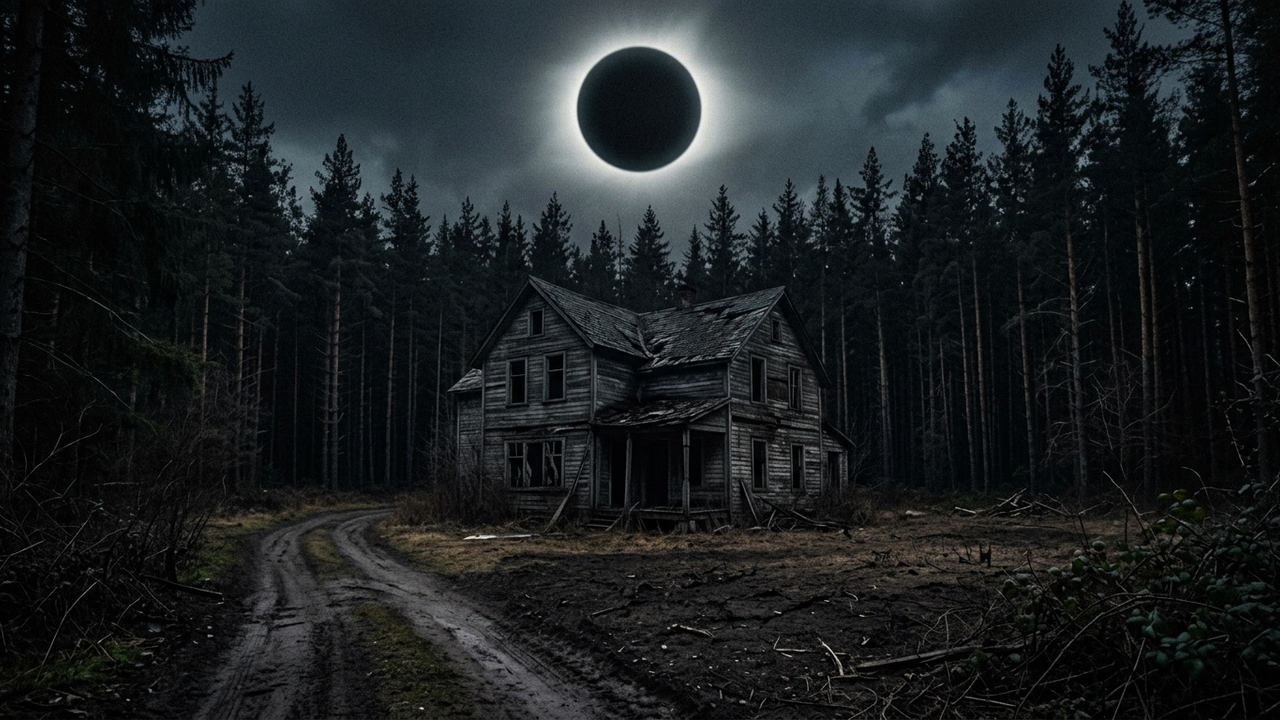
When Rohan bought the isolated country house empty for twenty-three years, he ignored the warning signs: no birds on the roof, dead soil around the perimeter, and no insect sounds. But the first night, every clock freezes at 3:17 a.m., an obsidian door manifests beneath the staircase leading into an impossible underground labyrinth of clawed names, and the sunrise reveals a pitch-black eclipsed sun hanging over a motionless forest. As a silent crowd gathers among the pines pointing at the house, a woman named Meera appears outside his second-floor window smiling: 'Let us in.' Two years after escaping, an unaddressed letter arrives with a single photograph and six words: 'YOU LEFT THE DOOR OPEN.'
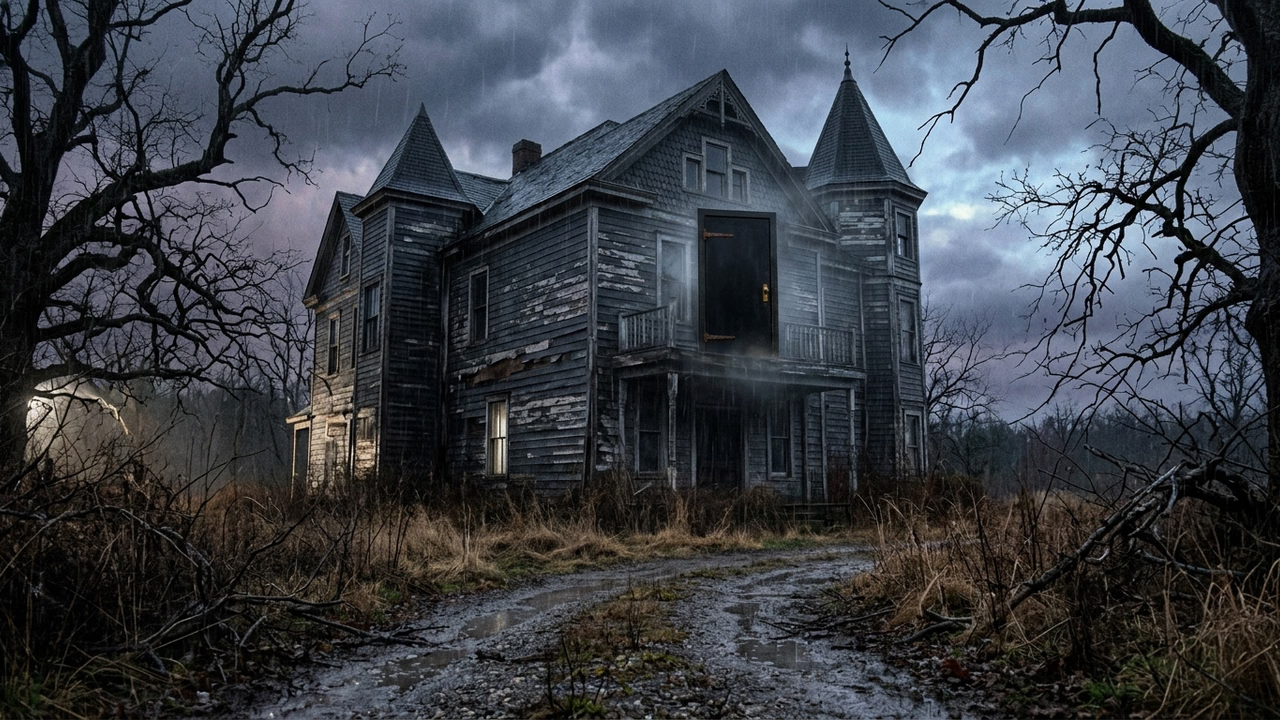
When Arjun bought the house at the end of the narrow road, the agent gave him only one rule: 'Whatever you do, don't open the black door.' After hearing rhythmic knocks at 2:13 a.m. and his own voice calling from behind the wood, curiosity overcomes him. Opening the door reveals an impossible stone staircase descending sixty steps into a bottomless subterranean abyss—where footsteps are climbing toward him. Then the 1958 disappearance records surface, a door manifests in his bedroom ceiling, his own black-eyed future self smiles from the rain outside, and a desperate phone call reveals he has already been missing for three months. Decades later, the house collapses into ruins, but the black door remains standing alone in the dead grass—waiting to open.
Every night, just after midnight, a woman in an ornate crimson wedding sari appeared beneath the ancient banyan tree at the edge of the village. The villagers called her The Red Bride. Men drawn by lust, greed, or gold followed her into the dark forest, only to behold her charred, cracked face and unnatural smile before disappearing forever. But years later, when a kind-hearted youth named Arjun offers her shelter in the rain without asking for her wealth, a century-old curse confronts its ultimate truth: she was never looking for someone to save her—she was looking for someone who could truly see her.
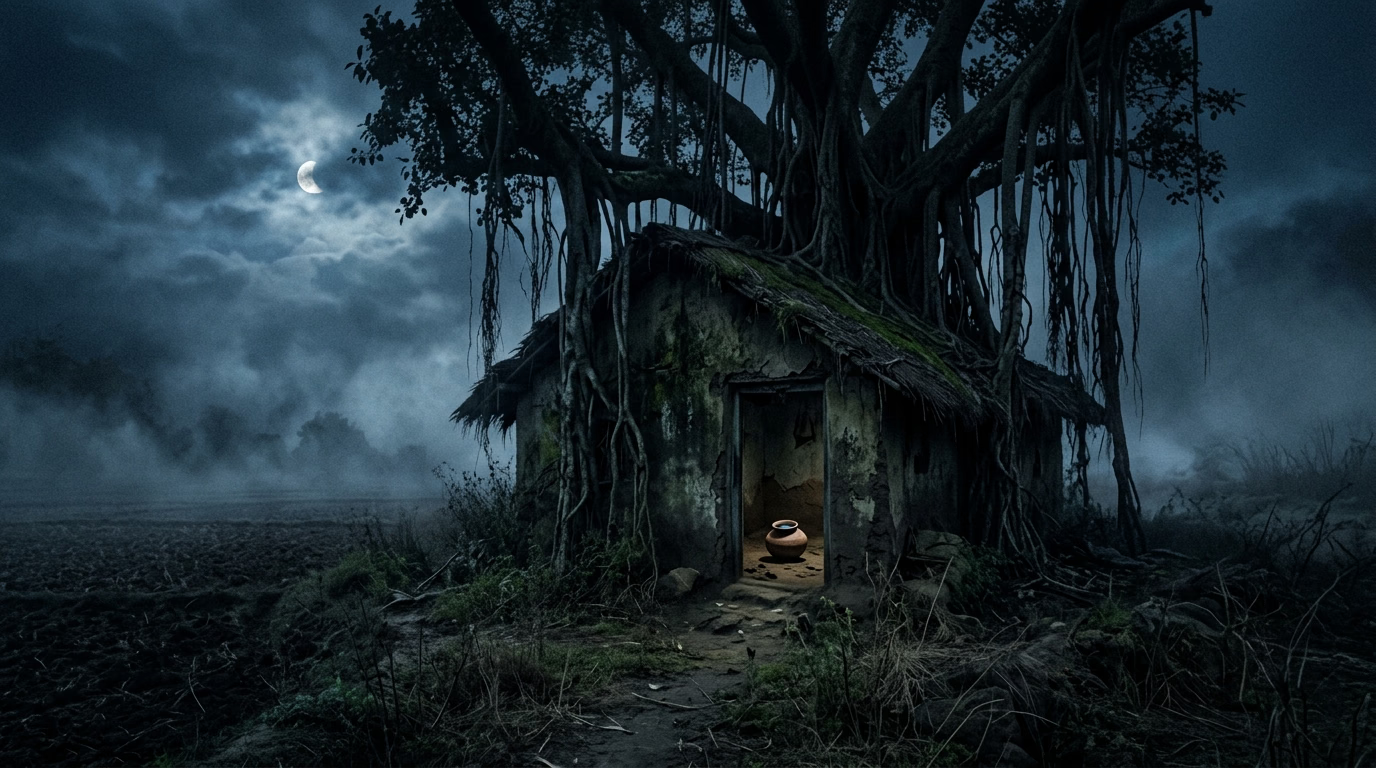
Beyond the village fields stood an ancient, blackened hut beneath a massive banyan tree. Everyone knew the rule: you could enter, explore, or even sleep inside safely, but never drink the water from the earthen pot. When twenty-two-year-old Ravi defies the superstition and drinks from the metal cup to mock his friends, a terrifying visitor appears at 3:17 a.m. with dripping wet hair covering a faceless dark void. Soon, Ravi's eyes turn pitch-black, and a woman's ancient voice speaks through his throat: 'She can't leave the hut... unless someone drinks.'
At 2:17 a.m., an old highway cut through the pitch-black wilderness like a jagged scar. When three violent robbers ambush young couple Arjun and Meera, smashing their car window and taking their lives before vanishing into the night, they believe they have committed the perfect crime. But at exactly 3:03 a.m. the following night, the abandoned car starts by itself, its dashboard flickering to life and its radio hissing: 'You took our lives. Now we'll take yours.' One by one, the killers are hunted down by an empty black sedan whose back seat carries pale passengers with void-black eyes. And once the car chooses you, there is nowhere on the highway you can hide.
Outside the isolated village of Black Hollow lay Whispering Woods, a dense, mist-shrouded forest where nobody ventured after twilight. Every night before midnight, a girl's haunting, melodic voice echoed deep among the pines, singing the same ancient nursery rhyme. Everyone knew the three unbreakable rules: Never ignore her, never disrespect her, and most importantly—never let her finish the song. When four friends enter the trees to debunk the legend, an insult turns the woods pitch black, physical bodies vanish leaving severed screaming shadows, and the final verse awakens thousands of empty-eyed lost souls waiting in the dark.